

What Are We Really Putting on Our Skin? Why Ingredient Exposure Matters More After Aesthetic Treatment
Skincare has never been more sophisticated- or more complicated.
Cleansers, serums, moisturisers, sunscreens, primers, makeup and treatment products can mean that multiple formulations are applied to the skin every day. For years, statistics have circulated suggesting that women expose themselves to more than 100 different cosmetic ingredients each day.
But simply counting “chemicals” tells us very little about whether a skincare routine is safe.
Everything around us is made of chemicals, including water. An ingredient being synthetic does not automatically make it harmful, just as an ingredient being natural does not automatically make it safe.
The more important questions are:
What are we applying? At what concentration? How frequently are we exposed to it? How much can penetrate the skin? And crucially, what condition is the skin barrier in when we apply it?
Recent research is beginning to make those questions increasingly important.
Our skincare contributes to our overall chemical exposure
Recent research has highlighted personal-care products as one component of the human “exposome”- the collection of environmental exposures we experience throughout life.
Cosmetics and personal-care products can contain complex mixtures of substances, and exposure can occur through several pathways, including dermal contact, inhalation and, depending on the product, mucosal exposure.
A recent review examining personal-care products considered exposure to substances including endocrine-disrupting chemicals, per- and polyfluoroalkyl substances (PFAS), volatile organic compounds, heavy metals and micro- and nanoparticles. The authors highlighted the potential for personal-care products to contribute to chronic low-level exposure to certain compounds. [1]
This does not mean that skincare as a category is dangerous.
It means that what we formulate with, how we use products and how the body is exposed to individual ingredients matters considerably more than an alarming headline about the number of “chemicals” in our bathroom cabinets.
Researchers are actually measuring this exposure
One particularly interesting recent study did not simply look at ingredient labels.
Researchers analysed 261 cosmetic and personal-care products for 13 parabens and two antimicrobial agents. They then combined those measurements with product-use information from more than 2,000 participants.
Methylparaben and propylparaben were among the most prevalent parabens detected, while skincare products, body and hand lotions and sunscreens contributed to estimated dermal exposure. Estimated dermal doses of parabens were also higher among females than males in the study population.[2]
Again, this does not demonstrate that using these products causes harm.
But it demonstrates something important:
The products we repeatedly apply to our skin can contribute to our overall exposure to individual cosmetic ingredients.
PFAS are another area attracting attention
PFAS—per- and polyfluoroalkyl substances—have become a significant area of environmental and health research. They are sometimes referred to collectively as “forever chemicals” because of the environmental persistence of many substances within this very large chemical family.
In a 2025 study, researchers analysed 64 beauty and personal-care products for PFAS.
Using a method designed to reveal oxidisable PFAS precursors, precursors were detected in 95% of the samples analysed. Products listing fluorinated ingredients generally contained higher concentrations of certain PFAS.[3]
Separate research using three-dimensional human skin models has demonstrated that dermal permeation can occur for some PFAS and that penetration varies considerably depending on the individual substance.[4]
These findings should not be interpreted as evidence that cosmetics as a whole are toxic.
Instead, they demonstrate why modern cosmetic science increasingly considers exposure, dose and route of exposure, rather than simply whether an ingredient appears on an INCI list.
But what happens when the skin barrier has been disrupted?
This is where the conversation becomes particularly relevant within aesthetic medicine.
Our skin isn't simply a surface.
The outermost layer- the stratum corneum- provides an essential protective barrier between our bodies and the external environment.
Under normal circumstances, this barrier significantly limits the penetration of many substances.
But many aesthetic procedures intentionally alter it.
Microneedling is perhaps the clearest example. Microneedles create microscopic pathways through the stratum corneum. One of the reasons microneedle technologies have attracted interest for transdermal and intradermal delivery is precisely their ability to overcome the skin's natural barrier and enhance the delivery of substances.[5]
That has enormous potential therapeutically.
But it also raises an important aftercare question:
If we deliberately alter the skin barrier during a procedure, should we be thinking more carefully about everything we put onto that skin immediately afterwards?
We believe the answer is yes.
Post-treatment skincare should not simply be normal skincare
Microneedling isn't the only procedure relevant to this conversation.
Laser and other energy-based procedures can temporarily alter skin-barrier function too.
Recent recommendations surrounding skincare and energy-based dermatological procedures recognise that barrier disruption can influence the absorption and delivery of topical skincare ingredients. The composition and formulation of products selected around these procedures therefore deserve consideration.[6]
That distinction matters.
A beautifully formulated everyday serum may be entirely appropriate for healthy, intact skin.
That doesn't automatically mean it is the product we would choose immediately following an aesthetic procedure.
More isn't necessarily better after treatment
Modern skincare encourages consumers to think in terms of active ingredients:
Retinoids. Acids. Vitamin C. Exfoliants. Pigmentation treatments. Peptides. Antioxidants.
But immediately following an aesthetic procedure, the objective changes.
Rather than asking:
“How many active ingredients can we give the skin?”
perhaps we should ask:
“What does this skin actually need during this stage of recovery?”
Recent expert consensus considering skincare actives around aesthetic procedures emphasised safety and tolerability when selecting products. Ingredients with greater irritation potential- including retinoids and several exfoliating acids—were considered inappropriate at certain immediate treatment stages, while hydration and barrier-supportive approaches were favoured.[7]
That provides an important message for practitioners and patients:
Post-procedure skincare should be considered a distinct phase of the aesthetic treatment pathway.
Aftercare deserves the same consideration as treatment
Aesthetic medicine spends enormous amounts of time considering what happens during treatment.
Practitioners carefully select products and devices. Skin is cleansed and prepared. Hygiene is considered. Treatment parameters are selected. Patient suitability is assessed.
Yet patients can then leave the clinic and return to a bathroom containing numerous skincare products—some of which may not be appropriate for freshly treated skin.
This creates a disconnect.
The clinical procedure may last 30 or 60 minutes.
The recovery process continues long after the patient leaves the clinic.
Providing appropriate aftercare therefore isn't simply an optional extra. It should form part of a considered patient pathway.
The future isn't “chemical-free” skincare
At AfterMED Skin, we don't believe the answer is to tell patients that chemicals are bad.
“Chemical-free skincare” is scientifically meaningless.
We believe the better conversation is about appropriate formulation, appropriate application and appropriate timing.
As research into dermal exposure develops, it reinforces something relatively simple:
What we put onto our skin matters. But when we put it onto our skin matters too.
And when an aesthetic procedure has temporarily changed the skin barrier, practitioners have an opportunity to take greater control of this stage of the patient journey.
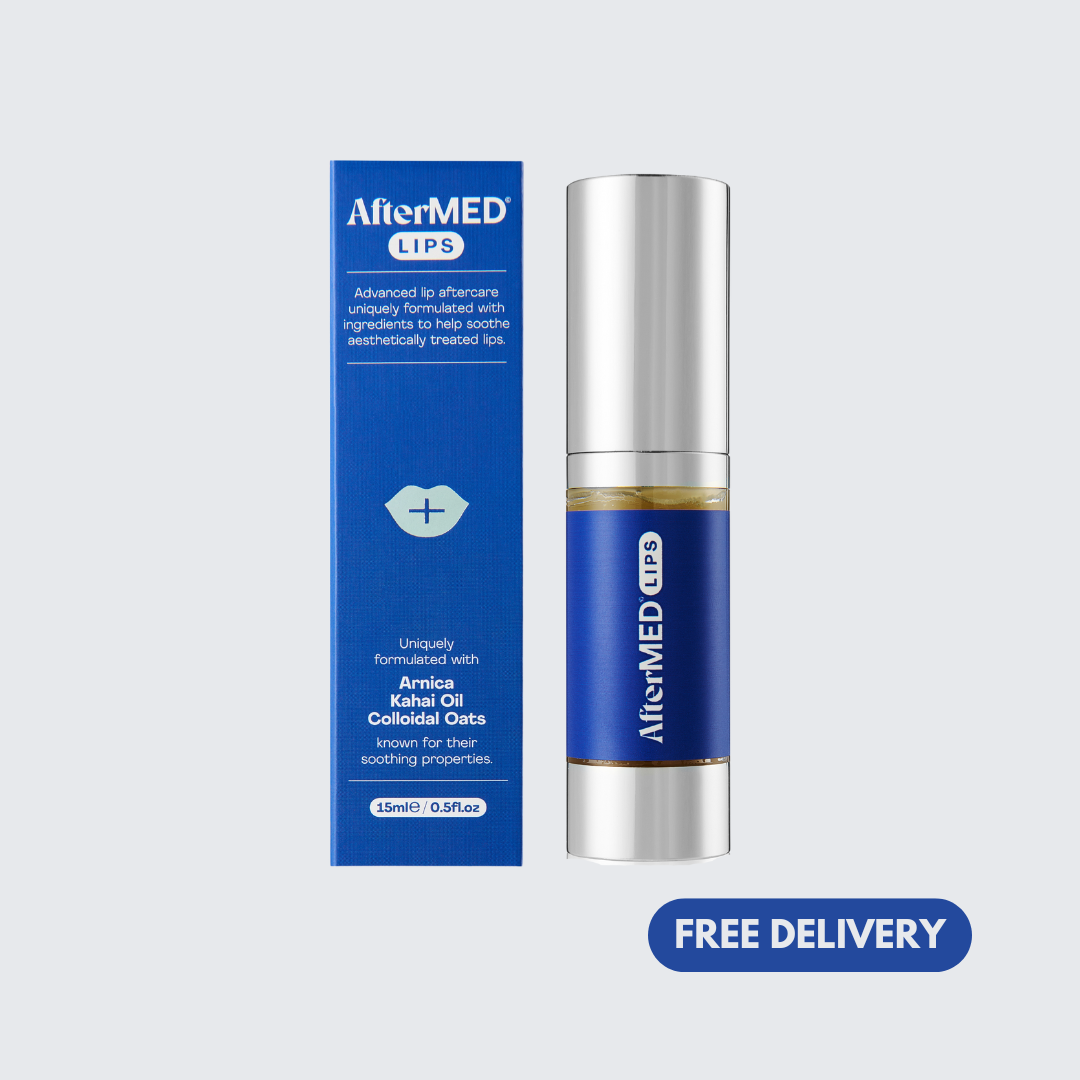
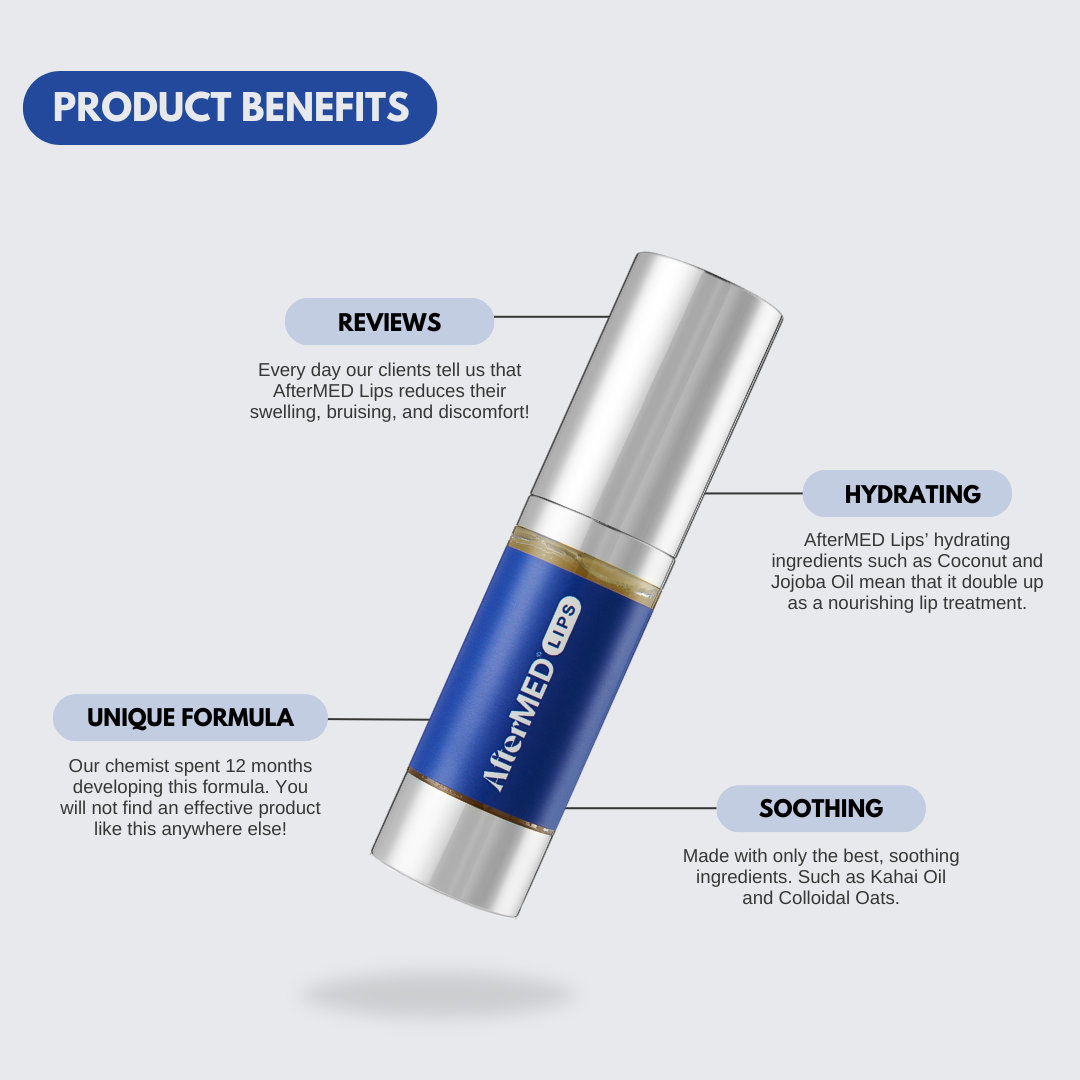
Rather than leaving patients to reach for whatever serum, moisturiser or active happens to be sitting at home, post-treatment skincare can become a deliberate part of the treatment protocol.
PREP. TREAT. FINISH.
Because professional aesthetic care shouldn't stop when the procedure ends.
References
1. Personal care products and the exposome: understanding human exposure to chemicals through everyday product use.BMJ Public Health, 2025. PubMed PMID: 41180360.
2. Study examining parabens and antimicrobial compounds across 261 cosmetic and personal-care products, incorporating product-use information from more than 2,000 participants. Environment International, 2025. Article identifier: S0160412025002272.
3. Study investigating per- and polyfluoroalkyl substances (PFAS) and their precursors across 64 beauty and personal-care products. Environmental Science & Technology, 2025. DOI: 10.1021/acs.est.5c11490.
4. Study investigating the dermal penetration of PFAS using three-dimensional human skin equivalents. Chemosphere, 2025. PubMed PMID: 40499412.
5. Review of microneedle-based cosmetic delivery and the use of microneedles to overcome the stratum corneum barrier and facilitate intradermal delivery. Journal of Drug Delivery Science and Technology, 2026. Article 100166.
6. Expert recommendations addressing skincare around energy-based dermatological procedures, including considerations following skin-barrier disruption. 2025. PubMed Central: PMC12198435.
7. International expert consensus evaluating skincare actives at different stages surrounding aesthetic procedures, with consideration of safety, tolerability, hydration and barrier support. 2026. PubMed PMID: 42087526.



Leave a comment
This site is protected by hCaptcha and the hCaptcha Privacy Policy and Terms of Service apply.