

Article: You Are Putting That on Your Skin After Aesthetic Treatments?
You Are Putting That on Your Skin After Aesthetic Treatments?
The average skincare routine can involve cleansers, serums, moisturisers, SPF, makeup and treatment products- meaning numerous cosmetic ingredients may be applied to our skin every day.
But after an aesthetic treatment, should we be more mindful about what we apply?
We think so.
Not all “chemicals” are bad, but formulation does matter
Headlines about the number of “chemicals” women apply to their skin every day can sound alarming. However, chemical does not mean harmful. Water itself is a chemical, and both naturally derived and synthetic ingredients can be safe or unsuitable depending on their formulation, concentration and intended use.
The more important conversation is about what we apply, how much we apply, what we combine and, more importantly, the condition of the skin when we apply it.
Modern skincare routines can involve layering multiple formulations and active ingredients. On healthy, intact skin, appropriately formulated products may be perfectly suitable.
But freshly treated skin presents a very different scenario.
Aesthetic treatments can temporarily change the skin barrier
The stratum corneum forms an important part of our skin's protective barrier, helping to regulate water loss and limit the penetration of external substances.
Procedures such as microneedling, laser and chemical peels deliberately disrupt this barrier to varying degrees. Even following injectable treatments, the skin has experienced needle entry points and localised trauma.
Research into aesthetic procedures demonstrates why this matters. Microneedling, for example, creates microscopic pathways through the stratum corneum and can enhance the delivery of substances into the skin.[1] Expert recommendations surrounding energy-based procedures have similarly highlighted that barrier disruption can affect the absorption and delivery of topically applied ingredients.[2]
This raises an important question:
If we are careful about everything that touches the skin during an aesthetic procedure, why would that consideration stop as soon as the treatment is finished?
This is not the time for a complicated skincare routine
Patients may routinely use retinoids, exfoliating acids, vitamin C, fragranced products, multiple serums and other active formulations.
Following treatment, however, more isn't necessarily better.
Recent expert consensus examining skincare around aesthetic procedures has emphasised safety and tolerability, with potentially irritating actives such as retinoids and exfoliating acids considered inappropriate during certain immediate post-treatment stages.[3]
Rather than layering multiple everyday skincare products onto freshly treated skin, aftercare should have a clear purpose: supporting comfort, hydration and the skin barrier while avoiding unnecessary irritation.
A product without a protocol leaves an important question unanswered
There is another issue with relying on generic skincare for aesthetic aftercare: the product may not come with instructions specifically designed for post-treatment use.
A moisturiser, serum or lip balm may tell a consumer how to use it as part of an everyday skincare routine but that does not necessarily tell a patient when it is appropriate to apply after an aesthetic procedure, how frequently to reapply, what other products to avoid, how to maintain good hygiene or when normal skincare can be reintroduced.
Without clear post-treatment guidance, patients may combine multiple products or reintroduce potentially irritating actives too soon. They may repeatedly touch the treated area, use products in ways they were never intended to be used, or simply be unsure about what they should apply when their skin feels dry, tight or uncomfortable.
The question, therefore, isn't simply:
“What product are we giving the patient?”
It should also be:
“Are we giving them the professional guidance to use it appropriately?”
Aftercare should be more than handing a patient a cosmetic product and sending them home. The formulation and the protocol surrounding it should work together.
This is why we developed AfterMED Skin’s range differently
AfterMED Skin was created because we believe post-treatment skin deserves products specifically considered for this stage of the patient journey.
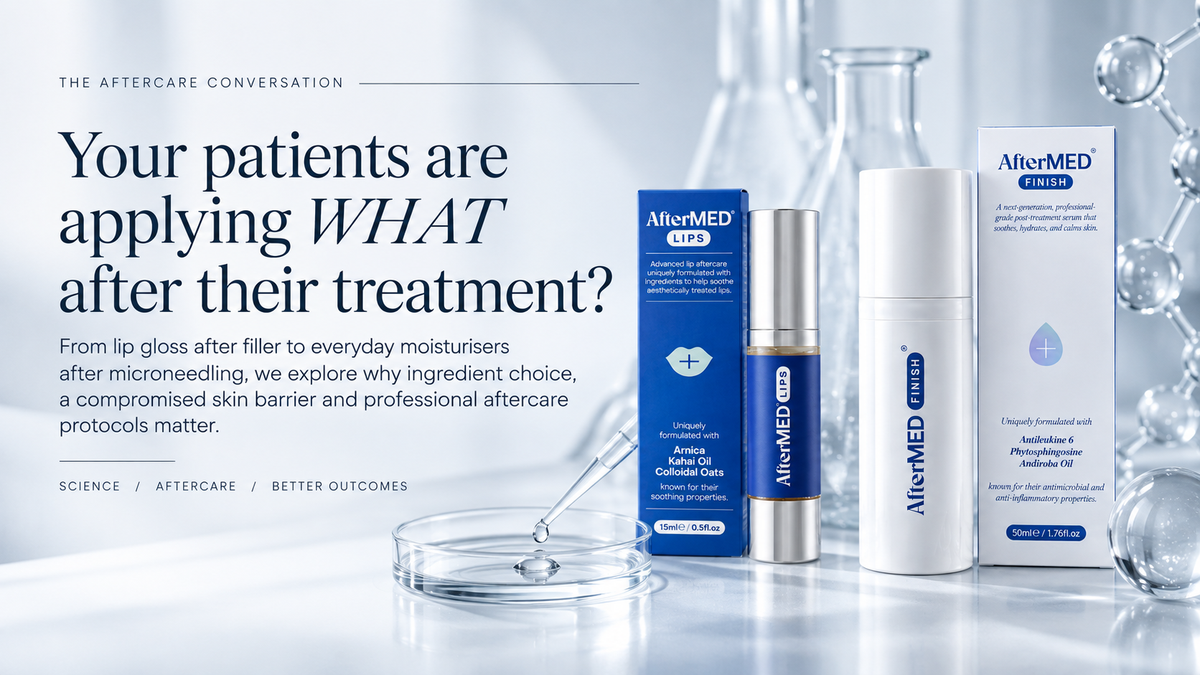
AfterMED Lips and AfterMED Finish weren't developed as everyday skincare products that happened to be used after aesthetic treatments. Nor were they created as cosmetic products with pigment, scents or unnecessary ingredients.
They were formulated specifically with aesthetic aftercare in mind.
Both formulas are anhydrous, alcohol-free and pigment-free and supplied through airless dispensing systems, with ingredients selected according to their intended post-treatment use.
After lip filler: what does the patient reach for?
Following lip filler, a patient may instinctively reach for their usual lip gloss, balm or petroleum-based product- a product that may have been repeatedly used, exposed to the lips and surrounding environment, and was never specifically formulated or supplied with a protocol for immediate post-injectable aftercare.
The issue isn't necessarily that their usual lip product is a “bad” product. It was simply formulated for a different purpose and a different stage of the skin journey.
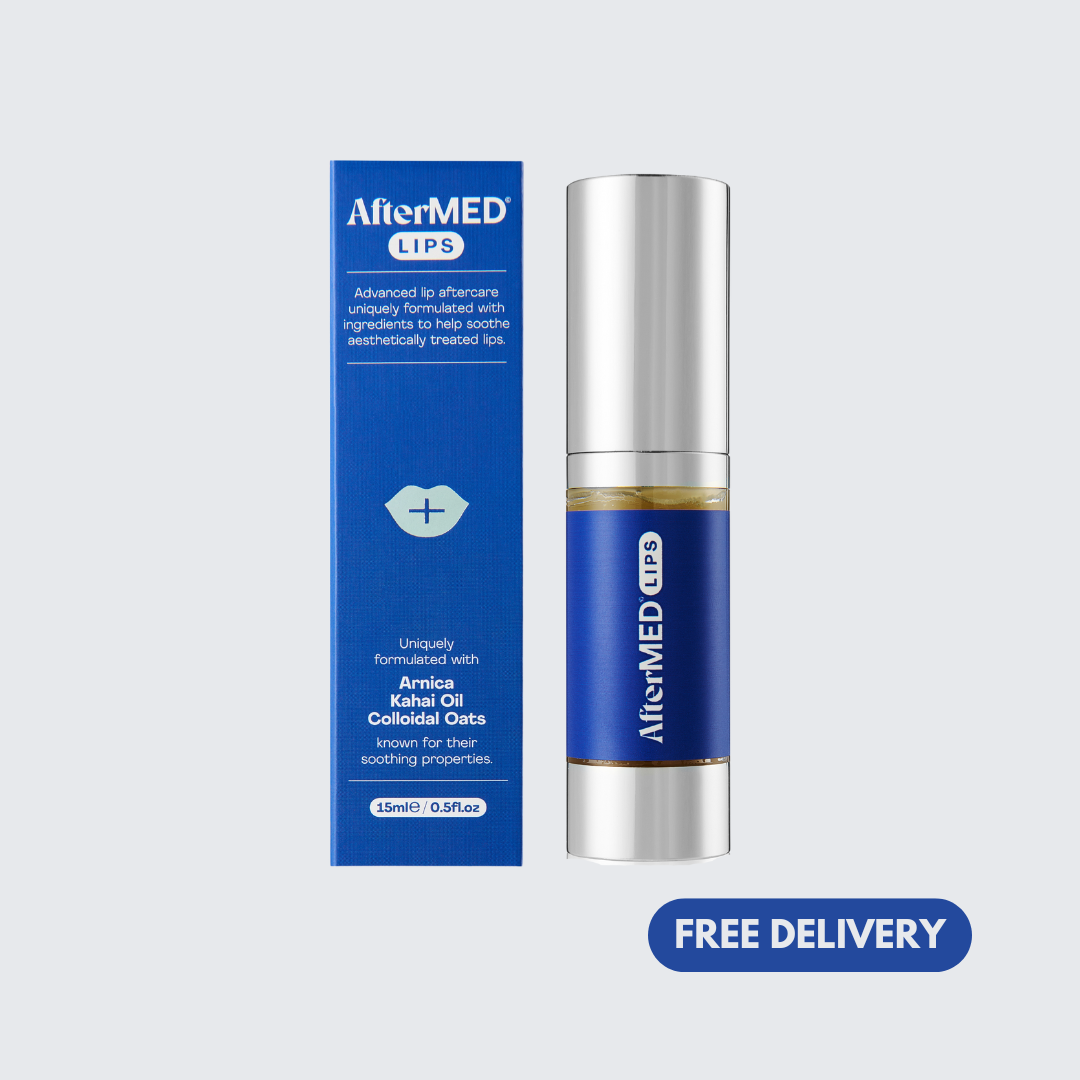
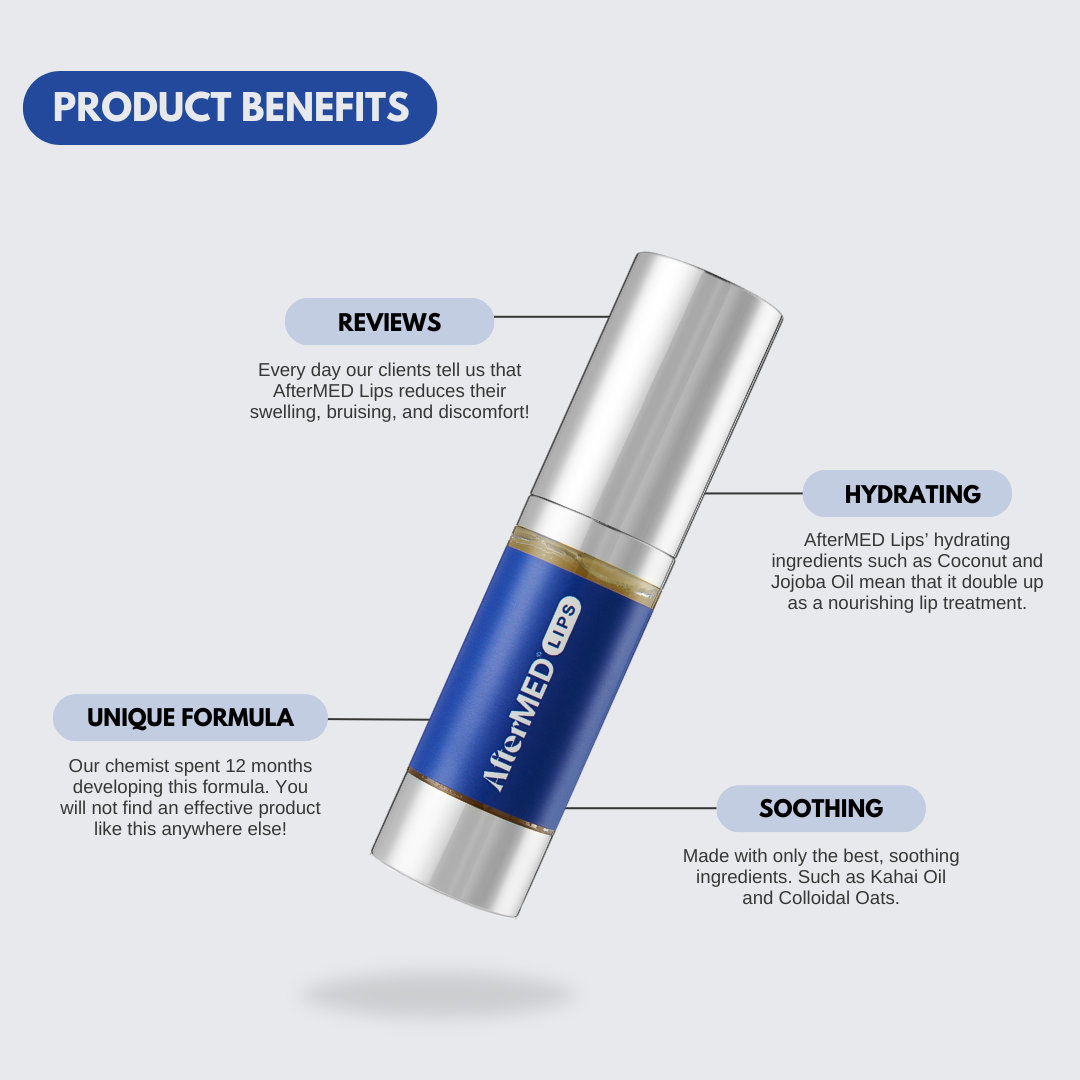
AfterMED Lips provides purpose-developed aftercare for aesthetically treated lips, including following lip filler, dissolving and lip blush. Its anhydrous, pigment-free formula and hygienic airless dispensing system have been specifically considered for aesthetic aftercare, alongside clear guidance for practitioners and patients on how it should be used.
After microneedling: what does the patient put on their skin?
Similarly, following microneedling, a patient experiencing dryness, tightness or discomfort may reach for an inexpensive everyday moisturiser or one of their usual serums, without knowing whether its actives, fragrance, alcohol or other ingredients are appropriate for a temporarily compromised skin barrier—or when and how frequently it should be applied.
Again, that doesn't make an everyday moisturiser inherently harmful. It simply wasn't necessarily formulated or supplied specifically for the immediate post-treatment period.
AfterMED Finish provides dedicated aftercare following procedures including dermal fillers, microneedling, polynucleotides and other aesthetic skin treatments. Its anhydrous, alcohol-free and pigment-free formulation has been designed to soothe, hydrate and minimise transepidermal water loss following treatment.
Aftercare should be a protocol, not just a product
Importantly, AfterMED Skin isn't designed to provide a product in isolation.
Our aftercare range is complemented by professional protocols designed to help practitioners guide patients through the post-treatment period—from how and when the product should be applied to appropriate ongoing aftercare advice.
This helps bridge the gap between what happens inside the treatment room and what happens when the patient goes home.
AfterMED Skin's products are also specifically insured for their intended aesthetic aftercare use, providing an additional level of reassurance for practitioners incorporating them into their post-treatment protocols.
Because if a practitioner carefully considers the products, techniques, hygiene and protocols used throughout an aesthetic procedure, shouldn't the products recommended immediately afterwards receive the same consideration?
Formulation matters. Protocol matters. Aftercare matters.
If you are an Aesthetics Practitioner looking for a dedicated aftercare solution for your patients, sign up to the AfterMED Skin Clinic Platform for wholesale pricing.
References
1. Review of microneedle-based cosmetic delivery and the ability of microneedles to overcome the stratum corneum barrier and facilitate intradermal delivery. Journal of Drug Delivery Science and Technology, 2026.
2. Expert recommendations addressing skincare surrounding energy-based dermatological procedures and considerations following skin-barrier disruption, 2025. PubMed Central: PMC12198435.
3. International expert consensus evaluating skincare actives at different stages surrounding aesthetic procedures, including safety, tolerability, hydration and barrier support, 2026. PubMed PMID: 42087526.



Leave a comment
This site is protected by hCaptcha and the hCaptcha Privacy Policy and Terms of Service apply.